

Bring generative AI into your team with structure and confidence
With the AI Adoption Sprint, we help teams move from a first use case to clear guidelines and practical workflows for daily work.
Featured in

AI is on almost every team's agenda.
Very few teams are using it productively.
We see these three challenges in almost every team:

Uneven AI fluency across the team
Some employees use AI every day and work much more efficiently. Others barely use it, if at all. The result is uneven knowledge, inconsistent performance, and untapped potential across the team.

AI is being used
without a strategy
AI is being used here and there, but without a structured rollout, scalable workflows, or a shared plan. Everyone builds their own solutions, and no broader strategy emerges.

No clear view of where AI actually helps
Most teams know AI matters. What is often unclear is which tasks are suitable, which tools fit, and where to start in a practical way. AI stays abstract instead of becoming a practical tool.
When generative AI is meant to be more than isolated experiments, teams need a clear starting point. The AI Adoption Sprint brings shared orientation, clear guidelines, and three practical workflows into a format built around your team's real work.
The AI Adoption Sprint

Initial call, tool and use-case selection
In a 60-minute initial call, we get to know your starting point. Which tasks repeat every day? Where are the friction points? Where could AI help in concrete terms? From there, we tailor the sprint to your team. If you do not yet have the right AI tool in place, we support the selection and introduction of GDPR-compliant solutions.
Outcome: a clear roadmap tailored to your team.

Session 1
Build shared AI fluency across the team
In the first workshop, we bring your team to a shared level of AI understanding. We clarify what generative AI can actually do today, where its limits are, and what safe, useful application looks like in everyday work.
Outcome: your team can work more effectively with AI and develop strong prompts independently.

Session 2
Tailored workflows for your team's daily work
Based on the initial call, we develop three AI workflows for your real tasks and present them in the second session. Research, document creation, communication, and knowledge synthesis: each workflow is tailored to your day-to-day work and ready to use immediately.
Outcome: three custom AI workflows your team can use right away.

What our clients say
-
![Martina van Hettinga]()
"Daniel got up to speed on our model and our process and data protection requirements in no time. In individual workshops, he advised us in a practical, outcome-focused way. His preparation, AI expertise, and pragmatism make him an excellent AI consulting partner."
Martina van Hettinga
Managing Partner at i-potentials -
![Jan Klähr]()
"We brought Daniel in as a prompting expert for our AI Day. In his workshops, he manages to meet people at very different knowledge levels and inspire them equally. Working with him was also pleasant and straightforward. If another opportunity comes up, we would hire Daniel again immediately."
Jan Klähr
Team Lead Innovation at rms GmbH -
![Dr. Anna-Barbara Heindl]()
"Daniel Strauss is a reliable partner in our t3n online course program and consistently delivers outstanding quality. He knows how to distill complex AI fundamentals for the right audience, enabling our participants to work with the new technology confidently after completing the courses."
Dr. Anna-Barbara Heindl
Growth Manager at t3n Weiterbildung -
![Prof. Dr. Tanja Köhler]()
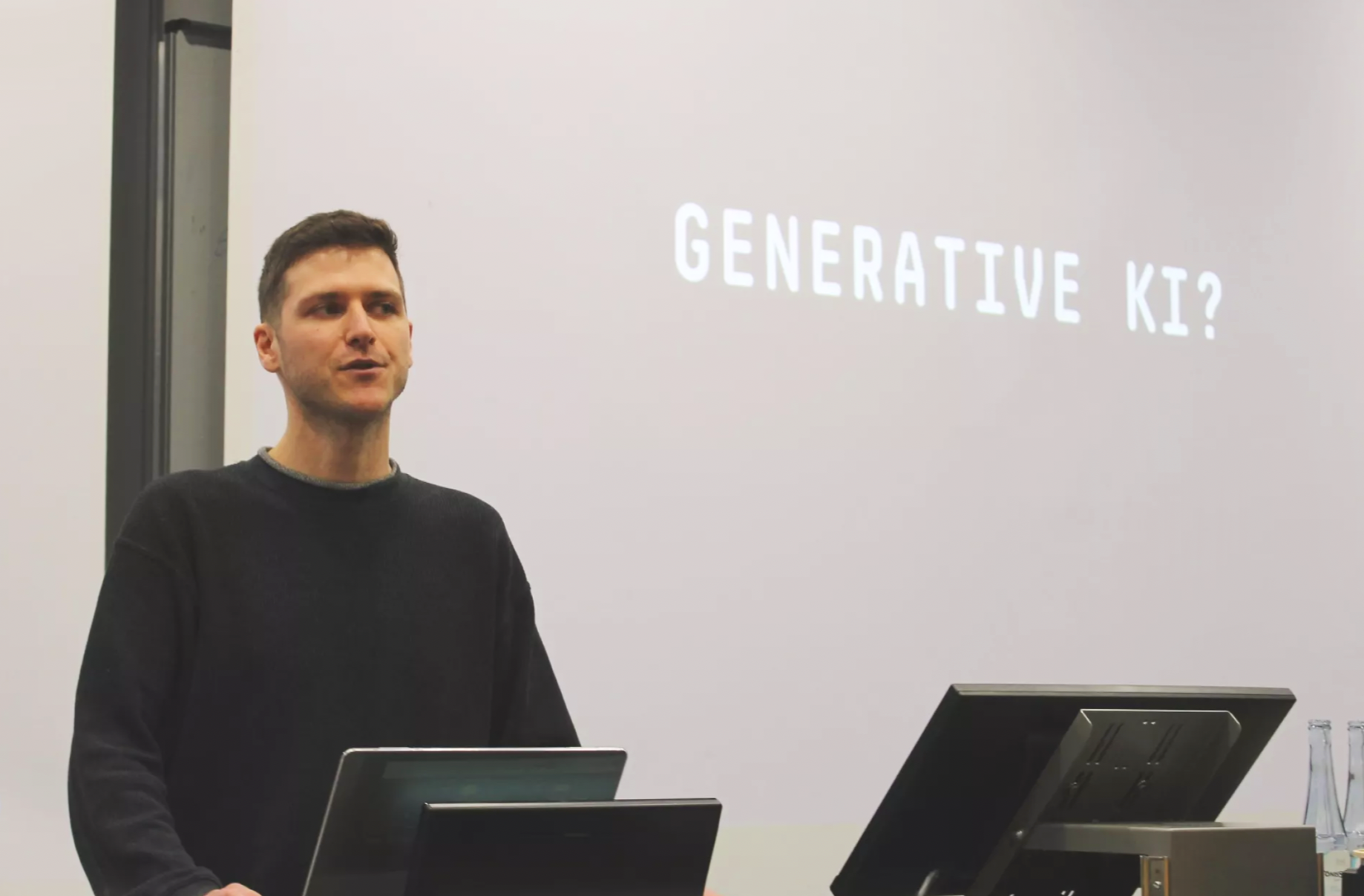
"Daniel was a guest in the lecture series 'The Media Makers.' In his talk, he showed impressively how essential precise prompting is for using generative AI effectively. Thanks to his interdisciplinary background, he combines technical expertise with humanities perspectives, making him an inspiring speaker and expert."
Prof. Dr. Tanja Köhler
Professor of Digital Journalism
Bonn-Rhein-Sieg University of Applied Sciences -
![Sebastian Hilpert]()
"I've attended many AI webinars, but Kathi and Daniel stand out. Their course is clear, practical, and genuinely engaging. They explain complex topics simply and respond flexibly to participants' needs. If you're looking for solid training in generative AI, you're in the right place."
Sebastian Hilpert
Senior Consultant at pentadoc


Experience grounded in real AI work

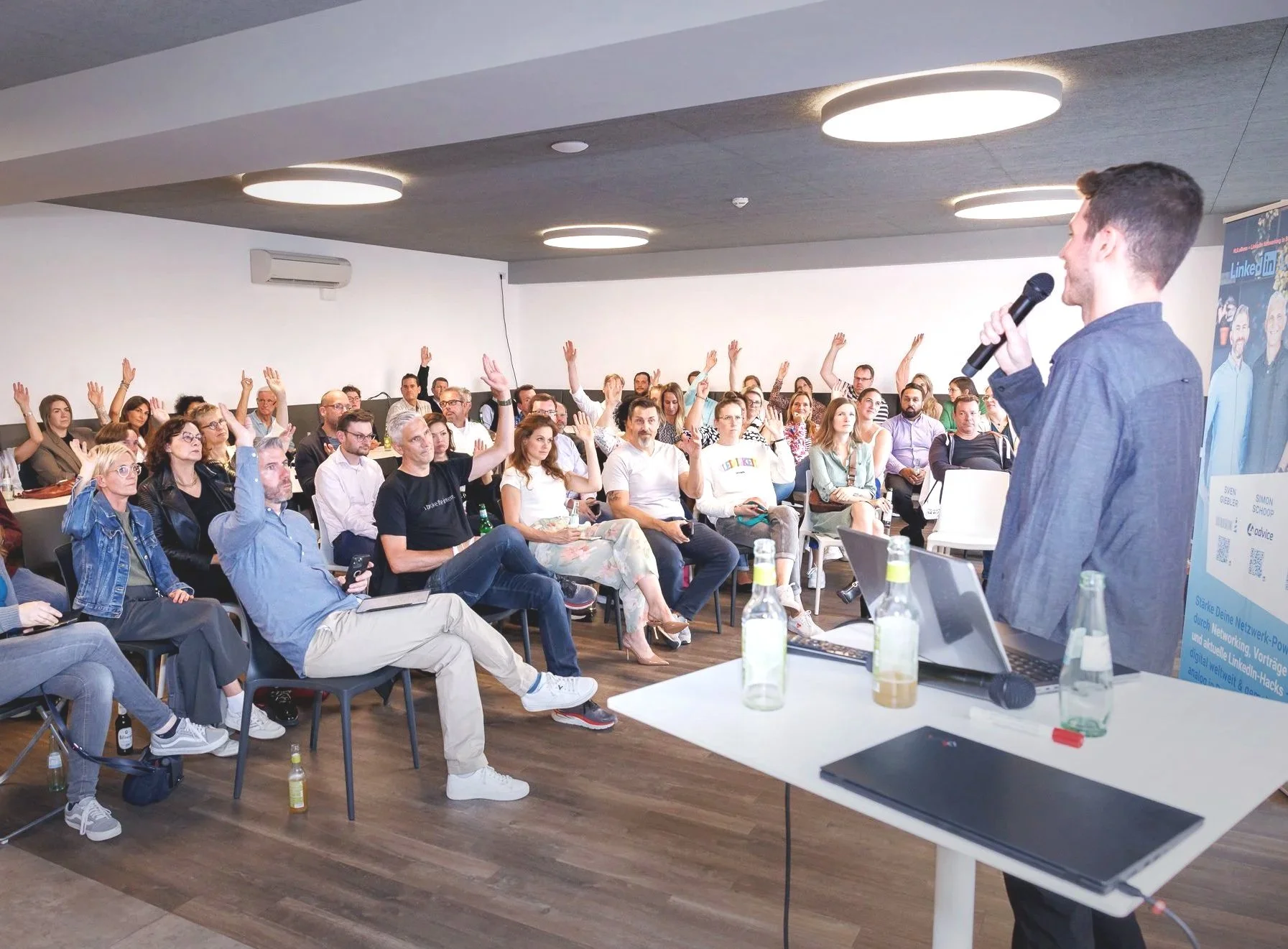
Since 2022, Daniel Strauss has helped companies translate generative AI into workflows their teams can understand, trust, and use. He started as one of Germany's first prompt engineers at the digital agency i22, where he led the company-wide AI initiative, developed internal training for more than 100 employees, and advised major clients including Deutsche Telekom and congstar on generative AI.
Today, he works with clients in Germany and the United States, developing practical workshops, custom AI assistants, and concrete workflows for knowledge-intensive teams. In 2024, he also developed the AI Thinkspace Masterclass with Kathi Zull, delivered across three live cohorts with more than 200 participants in total.